
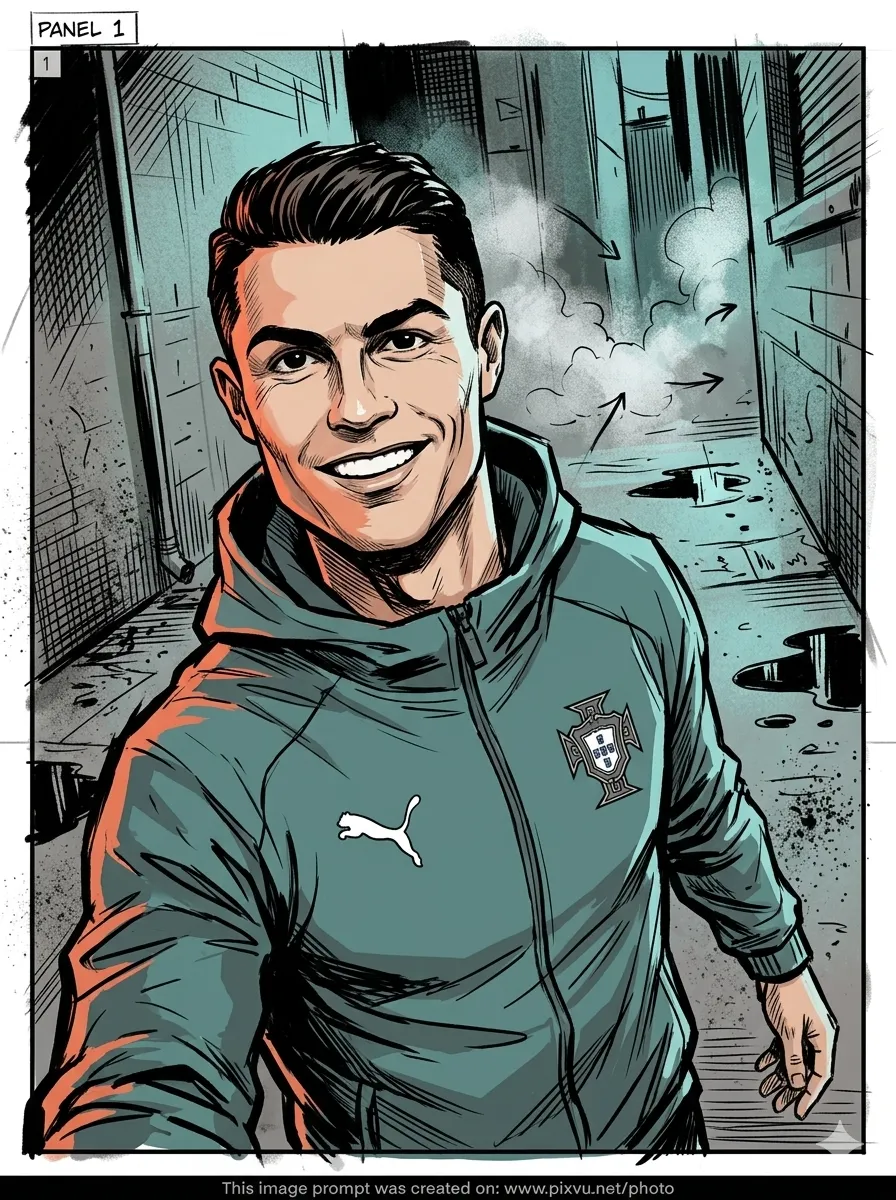
KARTUN KOMIK AI PROMPT
Kartun Komik AI Prompt. Turn your image into a comic-cartoon storyboard panel style. Buat foto anda seperti kartun di buku komik dengan prompt ini. Silahkan disesuaikan dan diulik sendiri.
PROMPT
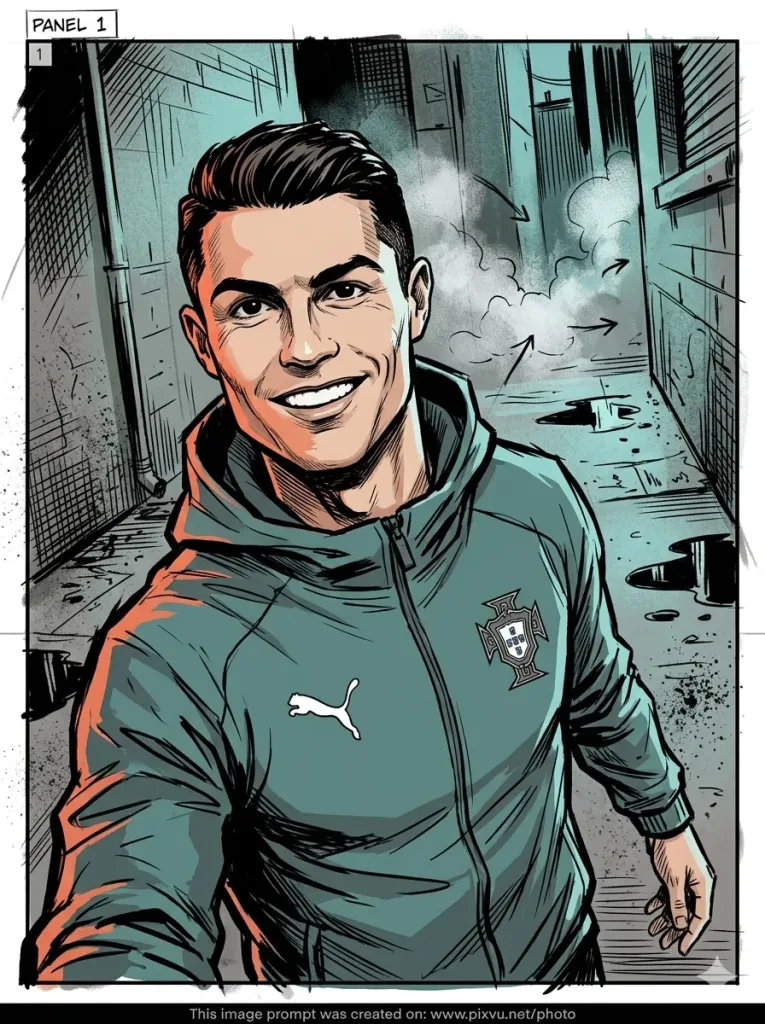
Convert this image into 3:4 gritty alleyway comic-cartoon storyboard panel in a comic-print 2D medium, using tilted low-angle cinematic framing, storyboard ink panels, and identity-preserving facial features and pose; preserve the subject’s face and primary clothing silhouette while allowing background and lighting to be restyled for gritty noir mood.
CHARACTER: Restyle the subject into a bold inked comic protagonist: preserve facial likeness, clothing shapes, and key accessories while translating edges into confident brush-contour lines and torn-cloth silhouette accents. Render clothing with simplified hard folds, heavy contour weight on foreground edges, and intentional ink bleeds at panel borders to emphasize motion and grit.
FACE & ANATOMY: Use comic-cartoon face logic: simplified planes, slightly angular jaw, pronounced brows, and high-contrast inked eye-sockets that maintain recognition. Keep head-to-shoulder ratio realistic but slightly compressed for cinematic tension; hands and fingers retain realistic scale but receive expressive hatch-defined shadows and energetic linework.
ENVIRONMENT: RESTYLE the entire alley background into a storyboard-ready comic plane: layered ink panels with tilted low-angle perspective, collapsed depth planes separated by textured brush smoke and two accent-color gel lights to define foreground and background planes without changing the subject pose. Add grit through rough wall hatching, scattered puddle reflections in graphic ink, and loose spray-ink grit near panel edges.
RENDER PIPELINE: MEDIUM: comic-print 2D. RENDERING TECHNIQUE: bold pen-and-brush linework with raw cross-hatching midtones, controlled ink wash edges, and panel framing lines. Apply storyboard panel masks with rough hand-drawn gutters and tilts. LIGHTING MODEL: stylized graphic light with two gel accent lights implemented as flat color washes over selectively masked planes; maintain strong black silhouettes and high-contrast rim inks.
COLOR & LIGHT: Use a restricted palette: monochrome ink base plus two saturated accent gels (one warm, one cool) applied as separate lighting planes to push foreground/background separation. Shadows use neutral desaturated hatches; highlights are minimal flat white or paper gaps.
MATERIALS & TEXTURES: Skin and fabric read as inked flat planes with hatch-built midtones and occasional brush-splash texture. Metal, wet pavement, and glass use dense black fills with sparse white spec lines and cross-hatch reflections. Smoke and atmosphere use textured dry brush strokes and grainy ink wash. DETAILS: Include storyboard elements: numbered panel corner stamp, subtle pencil construction lines under the inks, and rough directional arrows for implied motion when present. Place textured brush smoke between planes to increase depth. Maintain tilted low-angle composition and ensure two accent-color gels are used consistently to separate foreground and background.
STYLE EXCLUSIONS: Exclude photorealism, smooth digital painting, vector flat-icon style, generic cel-shading, and toy-like plastic rendering. Do not use cinematic photographic lens effects or realistic skin pore texture.
FOOTER: Add a very thin black or white strip footer along the bottom edge. Center this one-line text: “This image prompt was created on: www.pixvu.net/photo” in a medium sans-serif font. Keep it minimal, flat, and unobtrusive (no shadows or effects).
Source: pixvu
Leave a Reply